The Deliberate Decisions Behind Pliant's $100M ARR

Most $100 million ARR stories are about moving fast. Pliant's isn't. In this edition of Scaling at Speed, Malte Rau, Co-Founder and CEO of Pliant, shares how a series of deliberate decisions helped systematically build one of Europe's leading B2B payments businesses.
From the outset, the Berlin-based fintech set out to solve a problem hiding in plain sight: corporate card infrastructure had not kept pace with the way modern businesses operate. Rather than building another standalone card product, Pliant chose to build the infrastructure behind the category, starting in Germany and scaling to more than 30 countries, including the US.
The result is a scaling playbook built on patience, resilience, and a willingness to do the hard things first.
Keep scrolling to read an excerpt and watch the full interview.

An excerpt from: Scaling with Discipline: Pliant’s Journey to $100M ARR
In the early days, Pliant worked with regulated third-party providers, but made a deliberate choice to build as much of the core technology in-house as possible. That decision cost the team time, including roughly a year of building before going live, but it also revealed the scale of the opportunity.
“Our infrastructure could become much more valuable. The harder it gets to build, the more moat you have,” Malte says.
Over time, Pliant became a regulated institution itself, gaining greater control over the infrastructure behind its products. What initially looked like a slow and expensive route became the foundation for serving banks, fintech and SaaS companies, and complex enterprise customers across multiple markets.
That approach ran against the prevailing mood of the time. During the pandemic-era technology boom, many companies were encouraged to launch quickly, grow at all costs, and prioritise top-line momentum over long-term infrastructure.
“We were building for a full year before launching,” Malte says. “Looking back, we went the hard way rather than the uncomplicated way. Now we increasingly see that paying off.”
Scaling to $1 Billion
Kraken Technology Group has raised a $175m Series B at a $1bn valuation to help strengthen maritime defence readiness for NATO and allied partners.
Founded in the UK, Kraken builds scalable maritime defence systems, including high-speed uncrewed vessels designed for complex maritime operations.
Over the past year, the team has secured major contracts with the UK Ministry of Defence, NATO European partners, and USSOCOM. They have also built manufacturing partnerships with Anduril Industries, Rheinmetall, and Davie Shipyards to support global deployment.
Read more in Bloomberg below.
 Maya Thompson and Mark Bergen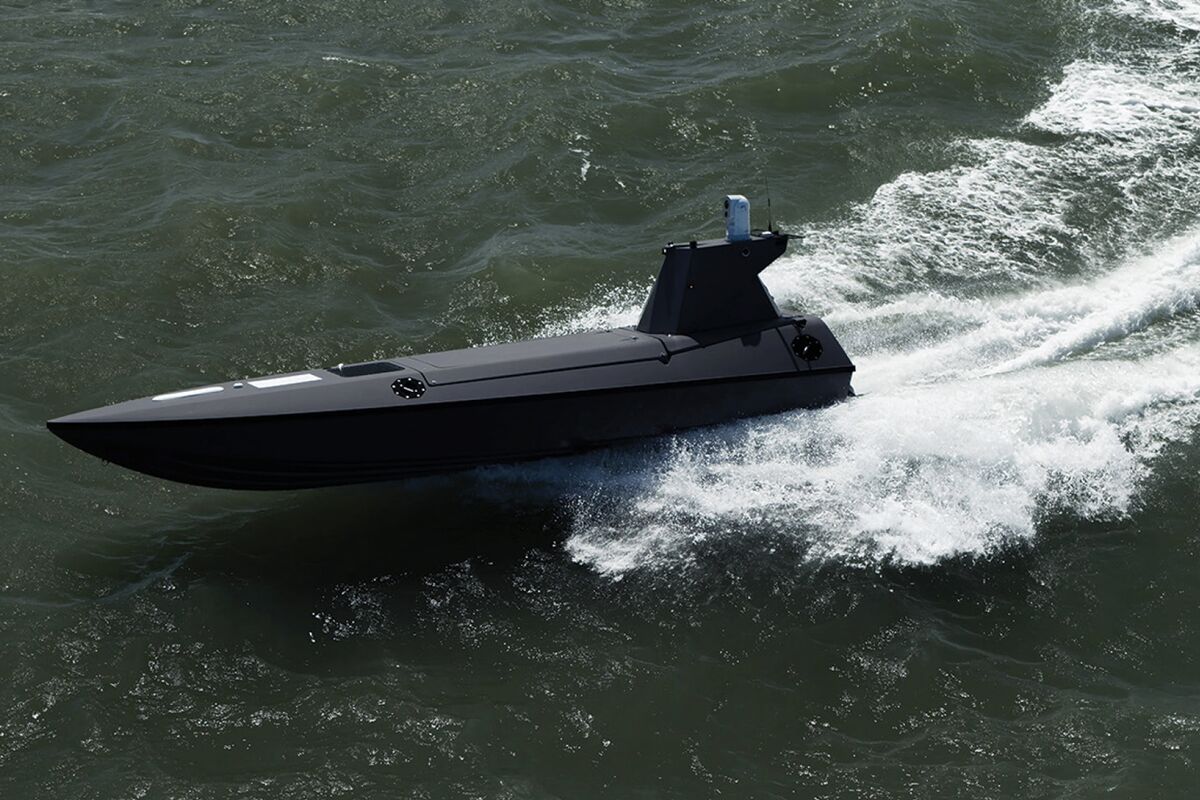
From Our Investors' Desk
From deep sector expertise to our take on the future of tech and venture capital in Europe, here are some of our recent musings from social media.

○ Following a recent Financial Times opinion piece on European tech, our General Partner Andreas Schwarzenbrunner shares his perspective on why Europe's future depends on building and backing its technology sector.
○ After spending a week meeting founders across Lagos and Abuja, our Partner Deepali Nangia shares why she believes Nigeria is home to one of the world's most exciting startup ecosystems.
○ From AI in healthcare to Europe's next generation of health and biotech founders, our Partner Andrea Zitna shares the conversations that stood out most over the past month.
○ Our Partner Frederik Hagenauer has one request for his LinkedIn followers using AI to write pitch decks or presentations: please use your own brain. ;-)
👉 What else we're reading:
Can a Chatbot Be Held Responsible for a Death? - Bloomberg
The Price to Finance the AI Data Center Boom Is Rising, Just Ask Meta - Wall Street Journal
Why this philosopher turned down Anthropic - Financial Times
Thanks for reading — see you next month,
Have feedback, suggestions, or topics you'd like us to dive into? Email us at press@speedinvest.com.